
When Everything Feels Urgent, Enter the Eisenhower Matrix
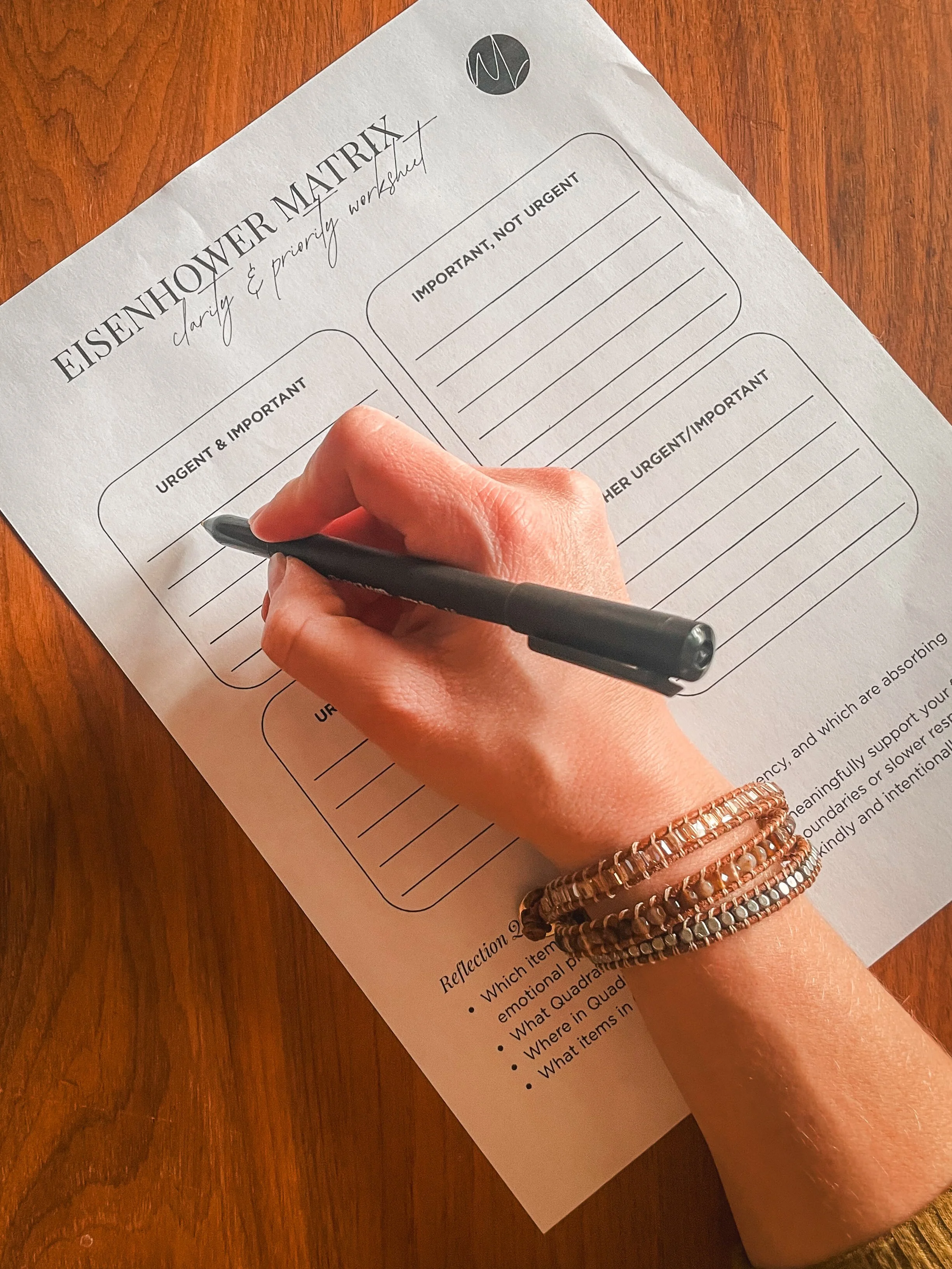
There are seasons where the to-do list doesn’t just feel full, but it feels emotionally heavy.
Not because everything on it is time-sensitive, but because everything feels like it carries weight:
unfinished projects you meant to get back to
house tasks that keep rolling over
ideas you feel guilty for not acting on yet
small decisions you’ve been postponing
None of them are technically emergencies…
but they still hum in the background like low-grade pressure.
And when that kind of mental noise builds up, it can start to feel like everything is urgent — simply because you’re carrying it all at once.
I’ve been in a season like that lately, especially while decluttering our home and preparing to blend households. It’s brought a lot of old tasks, objects, and decisions to the surface — and with them, a realization:
I wasn’t overwhelmed because I had “too much to do.”
I was overwhelmed because I hadn’t decided what actually mattered in this season.
And that’s where the Eisenhower Matrix quietly became helpful again, but through a much kinder lens than the one it’s usually taught through.
Urgency isn’t always about deadlines. Sometimes it’s about emotion.
Most of the things that feel urgent in everyday life don’t come with countdown timers.
They feel urgent because:
they’ve been lingering for months
they represent a version of you that used to exist
they remind you of something you “should” be doing
they carry a story you haven’t fully decided on yet
A half-finished project may not be time-sensitive.
But it feels urgent because:
“I should’ve done this by now.”
“I said I’d get back to this.”
“I don’t want to drop the ball.”
That’s not urgency. That’s emotional pressure.
And emotional pressure is powerful — especially if you’re already stretched thin, navigating a transition, or trying to build systems that match your real life instead of an idealized one.
That’s the point where I paused and asked:
What actually matters right now…
and what is just noise dressed up as urgency?
Enter the Eisenhower Matrix, as a clarity lens, not a productivity trick
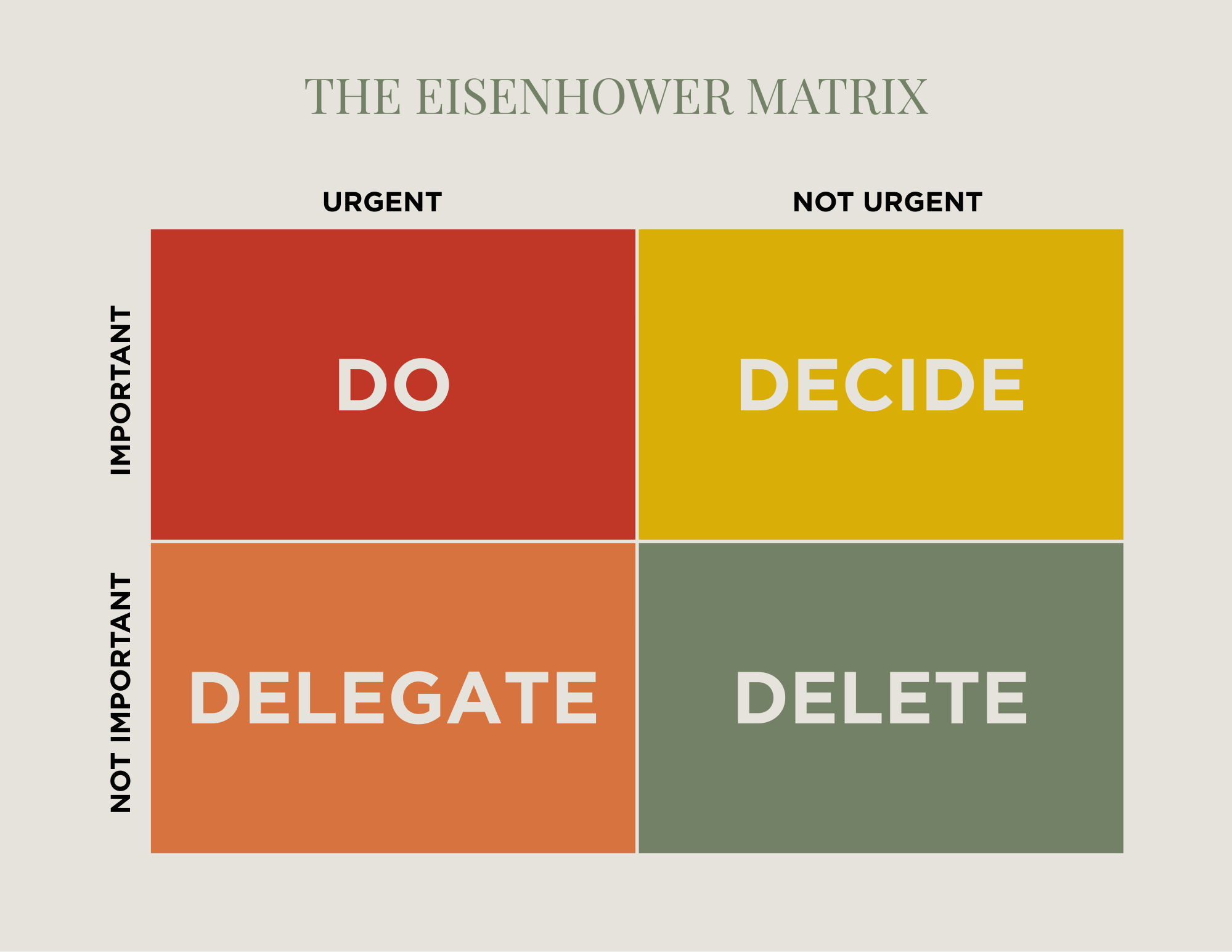
Most people view the Eisenhower Matrix as a decision-making tool. But rather than treating it like a rigid productivity system, I’ve been using it more like a clarity filter; a way to sort tasks based on how they actually function in my life right now.
So that looks like four categories:
Do. Decide. Delegate. Delete.
Not as pressure…
but as intention.
It helped me see what genuinely requires my energy, and what I’ve been carrying out of habit, guilt, or emotional urgency.
DO — Urgent + Important
These are the things that truly move life forward right now.
They are:
time-bound
values-aligned
directly connected to stability, care, or responsibility
They are the tasks I need to do today — by me.
Not because I’m hustling… but because they matter in this season.
This quadrant isn’t frantic — it’s grounding.
It’s the place where life gets tended to.
DECIDE — Important, Not Urgent
This is the quadrant where future-self work lives.
Things like:
systems that reduce friction
routines that create margin
planning, reviewing, adjusting
health, energy, and emotional maintenance
deep work that compounds over time
These tasks don’t demand my attention…
…but I’m always grateful when I make space for them.
Here, “decide” means:
choose a time — on purpose — instead of letting it linger in mental limbo.
This is where growth happens slowly, quietly, sustainably.
DELEGATE — Urgent, Not Important
This is where I realized a lot of my overwhelm was hiding.
These tasks feel urgent because:
someone else is waiting
there’s social pressure to respond
I don’t want to disappoint anyone
it’s easier to react than pause
But just because something is urgent…
…doesn’t mean it requires my direct involvement.
Delegate doesn’t always mean outsourcing.
Sometimes it means:
asking for shared responsibility
extending a timeline
clarifying expectations
or choosing not to own something by default
This quadrant helped me create gentler boundaries — without guilt.
DELETE — Neither Urgent nor Important
This category surprised me the most.
These weren’t “bad” tasks or ideas.
They were:
things that belonged to an earlier version of me
projects I no longer feel connected to
habits I’m keeping out of identity or obligation
noise that takes up emotional space
Letting them go didn’t feel like quitting.
It felt like telling the truth about who I am now.
Delete, for me, doesn’t always mean “erase forever.”
Sometimes it means:
release this from my mental load
so my energy can return to what matters.
And that shift alone made productivity feel lighter.
The shift that changed how productivity felt
Instead of thinking:
“I have too much to do.”
I began asking:
What needs to be done by me, today?
What needs a decided place in time?
What can be delegated or shared?
What can be kindly released?
And productivity stopped being about managing volume…
…it became about honoring direction.
Not faster.
Not harsher.
Not optimized to exhaustion.
Just clearer.
And more honest to the season I’m in.
This is the exact kind of clarity work the Life Audit Workbook supports — helping you:
define what actually matters in this season
see where your energy is being scattered
move tasks into Do, Decide, Delegate, or Delete with intention
So your time reflects your values — not your pressure. It’s totally free for you to download here.
And if you want support turning that clarity into systems that live inside your week, Clarity to Completion helps you anchor your priorities into time in a way that protects capacity instead of draining it.
