
Year-End Life Audit: Reflect, Reset, and Redesign Your Next Season
There’s a unique stillness that settles in after Christmas.
The gifts are opened, the house is quieter, the pace slows down a little, and the year suddenly feels both long and short all at once. It’s the in-between space where you’re still in the warmth of the holidays but already thinking about the fresh start ahead.
It’s the perfect moment for a year-end life audit.
Not a goal-setting session.
Not a pressure-filled list of resolutions.
Not a dramatic “new year, new me” promise.
Just a gentle, honest look at your life — what supported you, what drained you, and what you want to carry with you into the next season.
A year-end life audit helps you reset without the rush.
It brings clarity without chaos.
And it helps you design a year that feels aligned instead of overwhelming.
Let’s walk through it together.
What a Life Audit Actually Is (And Why It Matters)
A life audit is a reflective practice where you examine the major areas of your life with honesty, awareness, and intention.
It helps you:
understand what’s working
identify what’s not
release what isn’t serving you
reconnect with what matters
build a clearer vision for the next season
Instead of reacting to life, you become intentional about it.
A life audit creates the space to move forward with purpose.
Why a Life Audit Works Better Than Resolutions
Resolutions focus on behavior.
Life audits focus on alignment.
Resolutions rely on motivation.
Life audits rely on clarity.
Resolutions often fail by February.
Life audits become a foundation for long-term life change.
When you have clarity about who you’re becoming and what matters most to you, habits and systems fall into place naturally.
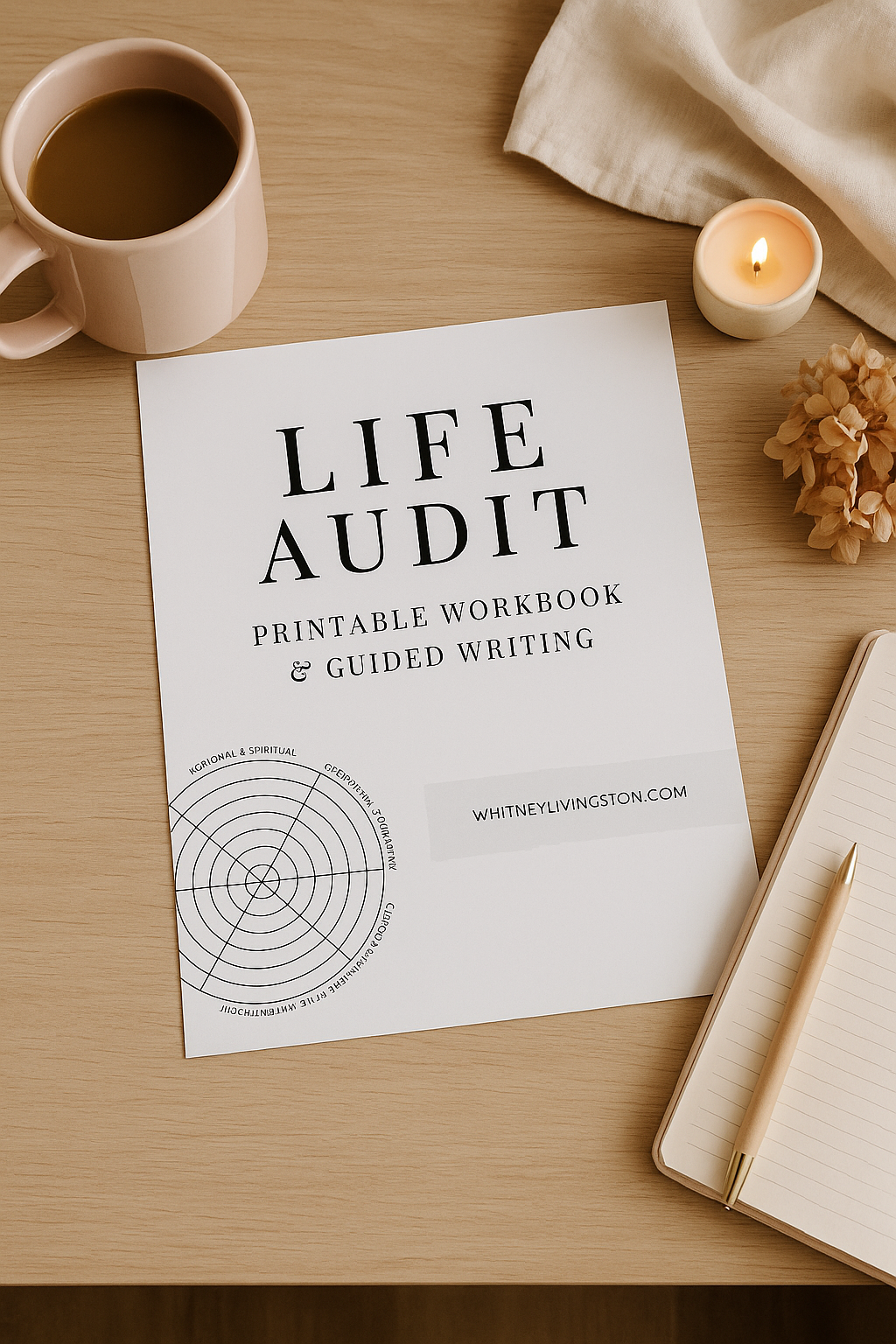
This is why your Life Audit Workbook is such a powerful tool — it helps you reflect and redesign your days with purpose.
A Simple Year-End Life Audit (Step-by-Step)
Here’s a gentle, grounded way to move through your audit this week.
1. Begin with the big picture
Before diving into specifics, ask:
What made this year meaningful?
What felt heavy or draining?
What surprised me — in good ways or hard ways?
Where did I show growth?
Where did I feel stuck?
This creates emotional clarity before logistical clarity.
2. Move through each area of your life
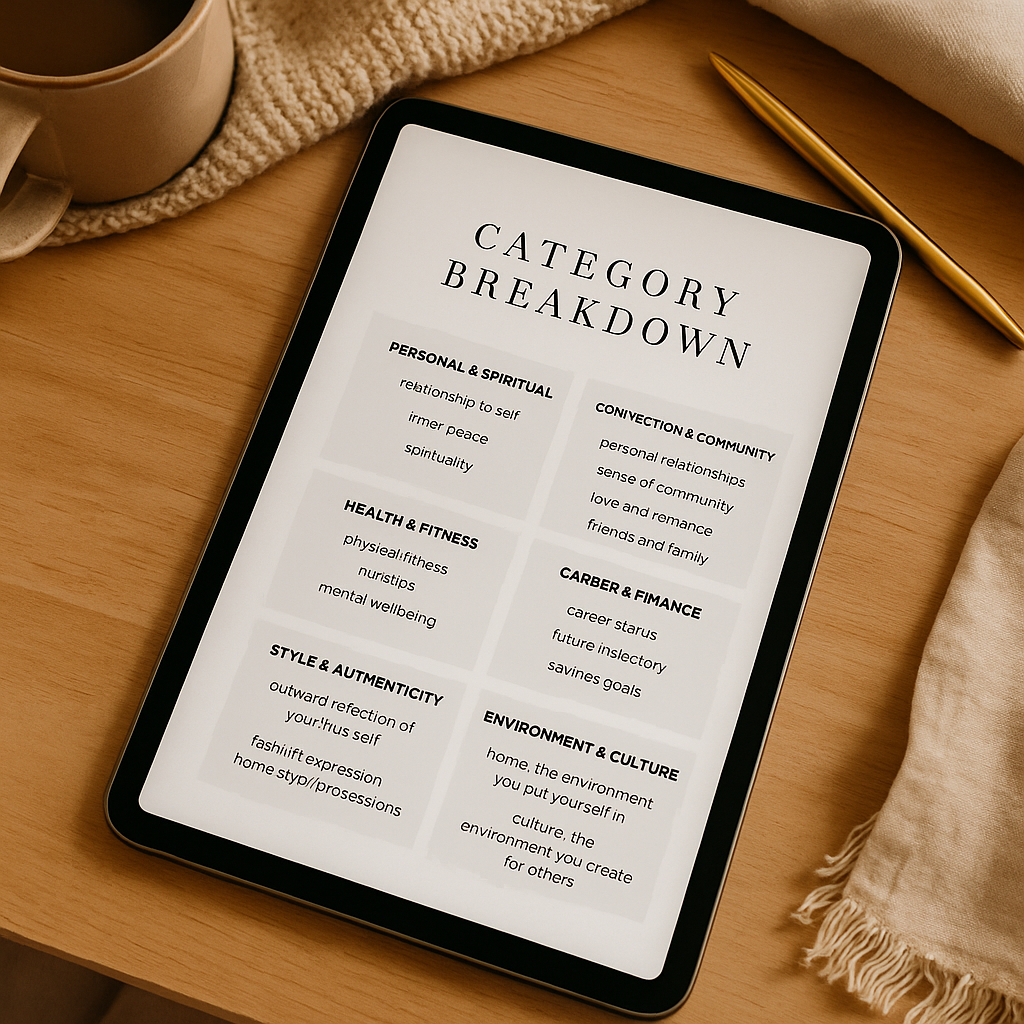
Review these major categories:
Home
Work or business
Relationships
Health and well-being
Personal growth
Creativity and hobbies
Finances
Time and energy rhythms
Physical environment
Mindset and emotional regulation
For each one, choose one win, one challenge, and one intention going into the new year.
This keeps the process simple and sustainable.
3. Notice the patterns
Patterns reveal priorities.
Ask:
What keeps coming up?
What do I keep wanting more of?
What do I consistently avoid?
What drains me repeatedly?
What lights me up every time?
Patterns will guide your direction more than goals ever could.
4. Release the things you don’t want to carry into the new year
Letting go is as important as adding new things.
Consider releasing:
outdated expectations
draining commitments
guilt around things you “should” do
habits that no longer align
systems that used to work but don’t anymore
Letting go creates space for what you actually want.
5. Redesign your next season
Instead of planning a whole year, think in seasons.
Ask:
What do I want this next season of life to feel like?
What does that version of me need?
What routines or supports will help me get there?
What boundaries will protect my energy?
What small habits will create momentum?
This is how you build a life that feels intentional, not pressured.
And if you want guidance, the Life Audit Workbook walks you through this process step by step — with clarity, structure, and calm.
Reflection Questions for Your Year-End Life Audit
You can use these today or over the next week:
What felt important this year?
What did I learn about myself?
What did I carry that wasn’t mine to carry?
Where did I grow the most?
What am I proud of?
What do I want to experience more of?
What needs to change for that to happen?
What intention do I want to bring into the new year?
These questions shift your focus from performance to alignment.
Your Next Step: A Guided Life Audit
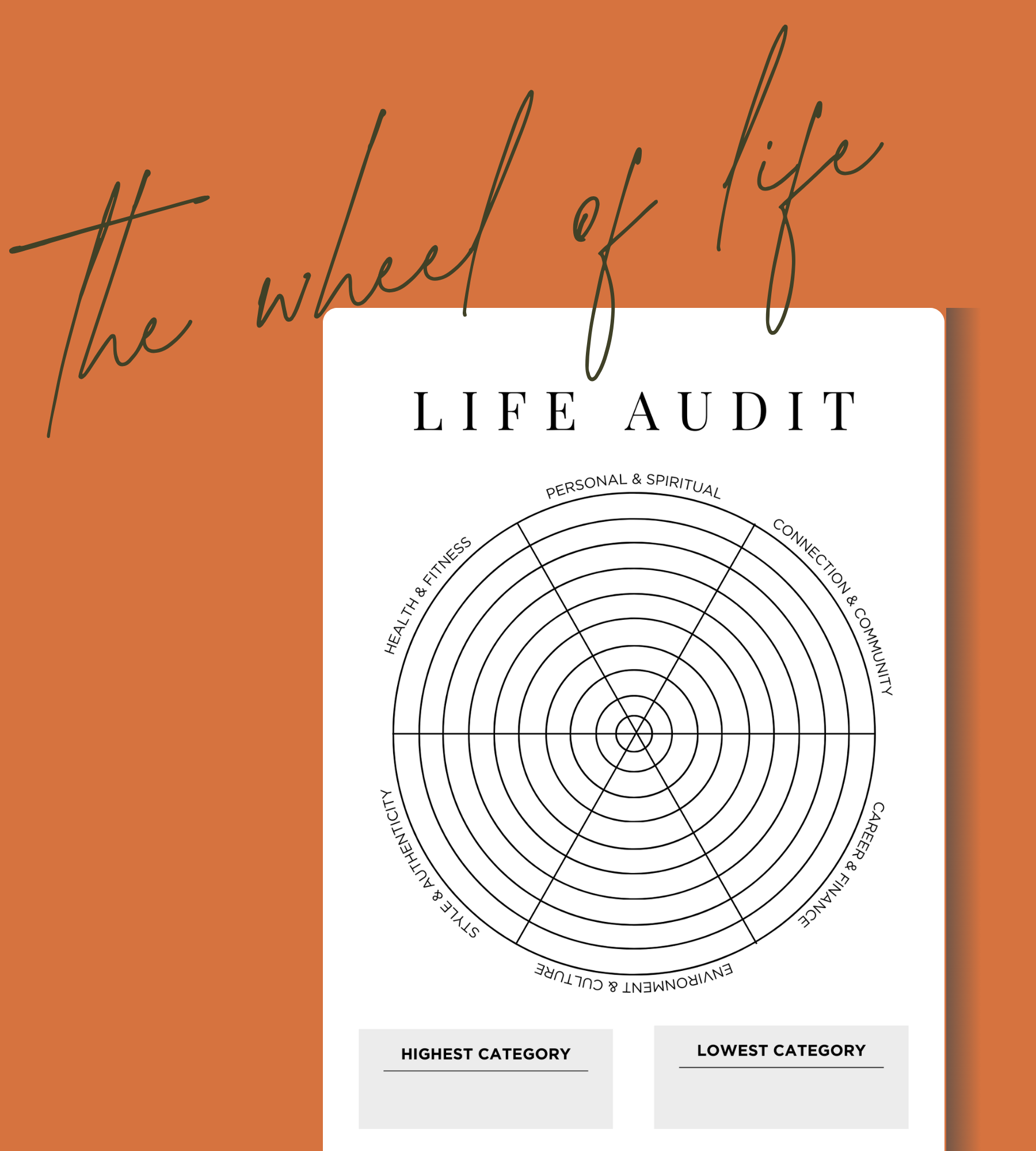
If you want support moving through this process with more structure and less overwhelm, the Life Audit Workbook is the ideal tool for this season.
Inside, you’ll find:
guided questions
beautifully structured reflection pages
space to assess each area of your life
clarity-building worksheets
support for your next-season routines
gentle prompts to help you realign your time and energy
It’s grounding, peaceful, and deeply transformative — especially in this end-of-year window when you’re ready for clarity and calm. And if you’ve got questions on how it works, I’ve written a full blog post on it.
This is your moment to reflect, reset, and walk into the new year with intention — not pressure.
You deserve a season of clarity.
