
Life, Noticed: The Thing About Roses
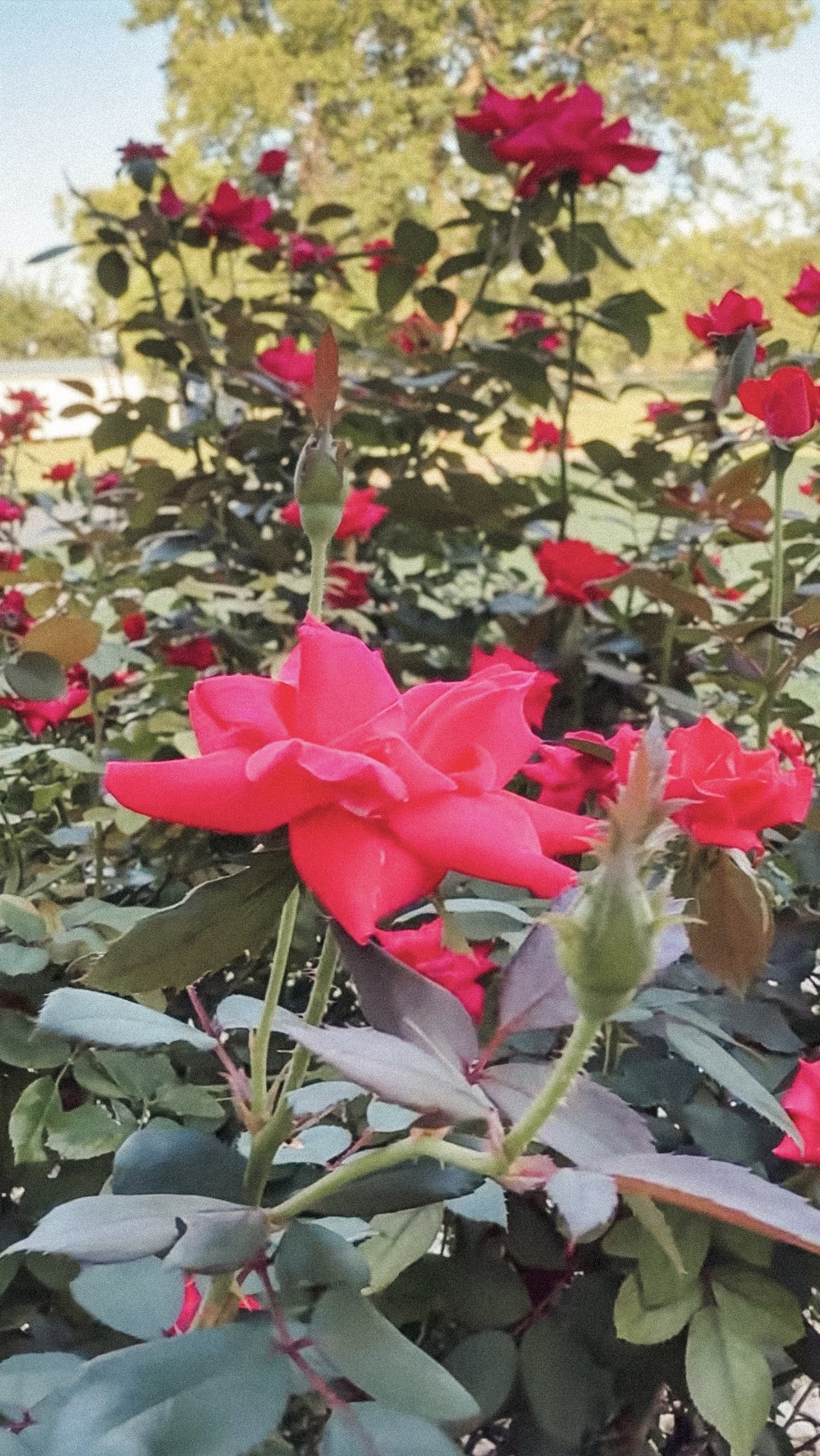
There is a point every summer when my rosebushes start looking a little rough.
They’re still blooming. Technically. But mixed in with all the new growth are flowers that peaked a week ago and are now brown around the edges, petals barely hanging on.
And this is the part of growing roses that has always felt a little counterintuitive to me:
You have to cut them off.
Not just the obviously dead stuff. The flowers that were beautiful. The ones the plant spent all that time and energy growing.
Once they’re spent, they have to go.
So I was outside pruning my roses the other day, moving from branch to branch and cutting away everything that had finished blooming, when I started thinking about how strange that is.
My logical brain tends to believe that cutting something away creates a deficit.
If I remove something, now there is less.
A gap.An empty space where something used to be.
We tend to think about our lives this way, too.
Growth usually sounds like addition. Add the habit. Start the project. Make the plan. Set another goal. Learn something new. Do more. Become more.
And listen, I love a project. I love a goal. I love deciding that some area of my life could be better and immediately constructing a twelve-step plan to make it so.
But a rosebush doesn't just endlessly add. It also knows when to stop sending energy somewhere.
When a bloom has finished doing what it came to do, the plant doesn't need to keep sustaining it. So you cut it away, and those resources get redirected toward new growth.
That's the part I couldn't stop thinking about. Because the thing you cut off wasn't necessarily bad. It bloomed. It was beautiful. It served its purpose. And now it's finished.
I think sometimes we keep things in our lives because we believe ending them would mean they were mistakes.
A commitment we once genuinely wanted. A routine that worked really well in another season. A goal we've quietly stopped caring about. A possession we once loved. An expectation we set for ourselves so long ago that we don't even remember deciding it.
Maybe even a version of ourselves we worked really hard to become.
So we keep feeding them. A little time here. A little mental energy there. Another spot on the calendar. Another thing to maintain, organize, remember, worry about, or feel vaguely guilty for not doing better.
None of it seems particularly expensive on its own. But our resources are finite. Time is finite. Attention is finite. Energy is finite. Money is finite. And apparently roses figured this out long before I did.
There's a line from Matthew McConaughey's Greenlights that I've thought about a lot. He writes that “too many options can make a tyrant out of any of us.” His point is that sometimes becoming more ourselves requires getting rid of some of the excess that keeps getting in our way.
I think I used to hear ideas like that and immediately translate them into minimalism. Own fewer things. Clear the countertops. Clean out the closet. And sure. Sometimes the excess is stuff. But sometimes it's options. Commitments. Expectations. Plans. Goals. Obligations we volunteered for and then forgot we were allowed to un-volunteer for. Things we're maintaining mostly because we've already invested so much into maintaining them.
Even good things can become excess when there are too many of them competing for the same finite resources.
Maybe pruning isn't really about having less. Maybe it's about having enough of yourself left to give fully to what remains. That's what the roses seem to understand.
Pruning isn't about deciding that everything you've grown was worthless. It's recognizing when something has already given you what it had to give. That's different.
There are things I can look back on now that I wouldn't choose again, but I'm still grateful I chose them then.
Things that belonged in my life for a season. Things that taught me something. Things that were genuinely good until they weren't mine to keep tending anymore. Cutting those things away doesn't erase the bloom. It just stops asking today's resources to sustain yesterday's growth. And maybe that's what I've misunderstood about making room.
I've always pictured it as an empty-space problem. If I quit this, what will I do instead? If I get rid of this, what will replace it? If I stop pursuing that goal, what's the new goal? We are very uncomfortable with an unfilled space.
But when I'm pruning roses, I don't immediately attach a new flower where I cut the old one off. I just make the cut. The plant handles what comes next. It redirects the resources. New shoots form. New buds appear. And eventually, where there was one spent bloom, there can be several new ones.
The empty space wasn't actually empty. It was capacity. I wonder how many things I'm maintaining simply because I haven't given myself permission to stop. Not because they're important. Not because I still want them. Just because they're already there. And I wonder what could grow with the time, money, attention, or energy currently being spent keeping them alive.
I'm trying to get better at asking that question before automatically adding something else.
Not just: What do I want to grow?
But: What am I willing to stop feeding so it has room to grow?
Maybe that's the thing about roses. They don't treat any ending like a failure. They bloom. They spend themselves. And when that season is finished, they let the old growth be cut away so their resources can go somewhere new.
Maybe we could stand to do a little more of that, too.

Life, Noticed is a series about paying attention to the ordinary things that have something to say: the garden, the kitchen, the people we love, and all the unremarkable moments we might otherwise walk right past.